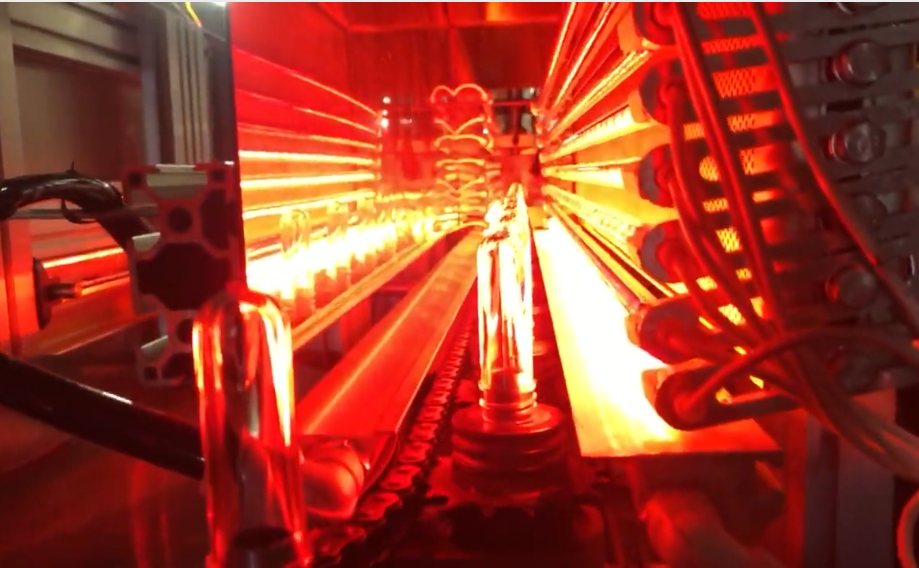
Out on the floor, that Sidel SBO6 is humming through a make-or-break job. Then the heating profile starts to drift—preforms coming out uneven, cold on one side, too hot on the other. You’re chasing setpoints, watching rejects climb, and you know the score: one weak lamp can bring the whole line to a halt.
What matters, technically
We build the Sidel SBO6 heater lamp as a direct-fit infrared emitter that meets the OEM’s expectations. It’s a high-stability quartz envelope with a halogen filament tuned for short-wave output, so it delivers fast, repeatable energy right onto the preform surface. Wattage, length, end cap geometry, and R7s connector alignment are held to tight tolerances. That’s how you get the lamp to seat cleanly in the heating tunnel and match the reflector path without fighting fit issues. Every unit is checked for spectral output consistency and thermal stability, because in stretch blow molding, heating uniformity is measured in seconds—not guesswork.
Why it holds up in practice
With this lamp, preform heating becomes predictable across the full cavity set. Temperature variance tightens up, so blow-up behavior stays consistent—fewer thin walls, fewer stress cracks. The fast-response design supports tighter timing windows, which helps you hold cycle rates without cooking the preform neck. Energy use drops because the emitter puts heat where it’s needed, with less wasted output, and service intervals stretch thanks to the quartz build. For an SBO6, that means stable output, less scrap, and fewer unplanned stops.
The practical details
Installation is straightforward, but the heating tunnel is a harsh environment. Handle the lamp by the base only, keep reflectors clean and properly aligned, and confirm the voltage matches the machine spec. Run outside the rated voltage and you shorten lamp life and throw the profile off. And if you’re running high-clarity PET, even small heating drift shows up fast—so pair the lamp with routine calibration and a documented PM schedule.