

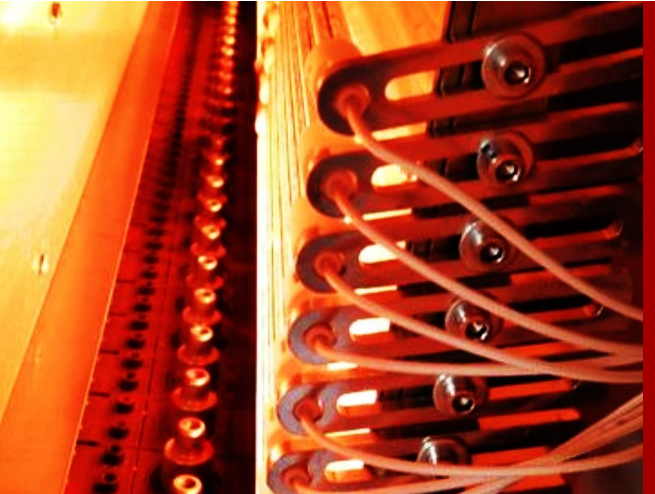
On the blow molder, uneven preform heating shows up immediately—off-center wall thickness, blown bottles, and scrap that just keeps piling up. The oven reflector plate is where the infrared energy gets focused, and when it isn’t doing its job, you pay for it in cycle time and quality. What matters under the hood We build these plates for PET ovens in stretch blow molding, matching the OEM geometry and mounting points for Sidel, Krones, SIPA, Husky, SACMI, and Nissei ASB machines. The substrate is high-reflectivity aluminum with a stable ceramic coating, chosen specifically to hold reflectance through repeated thermal cycling. The contours are formed to tight tolerance so short-wave and medium-wave infrared emitters lay down a repeatable, uniform heat profile across the preform shoulder and body. And the specs are straight off the catalog: standard voltages, defined lamp lengths, and R7s connector compatibility. The install is meant to drop in without any field modification. Why it works on a real line You’re running tight schedules and even tighter tolerances. This reflector plate puts the heating pattern back where it was designed to be, so preforms hit target temperature with less scatter—fewer hot spots, fewer cold shots. That means fewer rejects, more consistent bottle weight, and longer runs between oven cleans. You also cut energy use because reflectance stays high and the heat stays on the preform, not bleeding into the oven frame. As a direct, engineered replacement, it helps you keep spares under control without giving up performance in the heating tunnel. What you need to watch on install and in the long run Install is straightforward, but alignment is where people get tripped up. Even a small offset shifts the hot zone and can drive uneven stretch. Double-check emitter position, reflector orientation, and mounting torque against the OEM manual. Reflector life depends on the oven environment—high ambient heat, resin dust, and frequent cooldowns will shorten it. Keep to the inspection and cleaning schedule; once the surface shows pitting or discoloration, reflectance is already on the way down.