
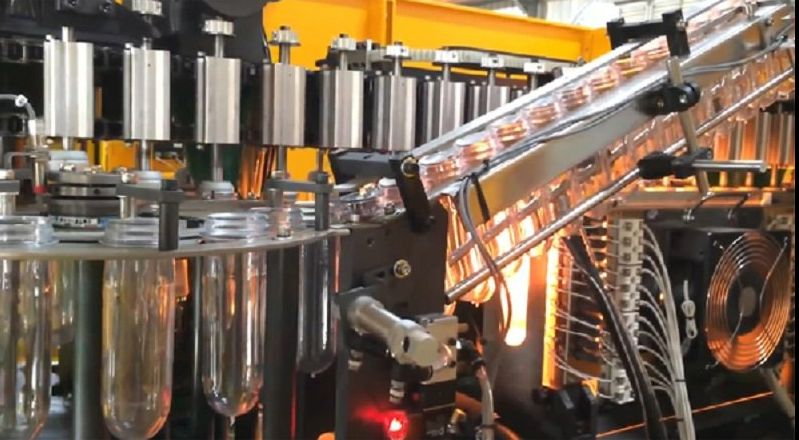
On a blow molding line, the heating box is where the run lives or dies. If preform temperature starts to drift, you’ll see the fallout fast—PET bottles splitting at the shoulder, haze showing up in the sidewall, or weight drift that keeps you chasing the fill line. On Sidel machines, the heating tunnel has to be kept tight, and the emitter stack is the first line of control.
What matters, technically
We build Sidel preform heating box parts to OEM tolerances, with quartz infrared emitters that match the original lamp geometry and electrical envelope. The specs are cut for the Sidel tunnel profile: standard voltages (230V/400V), precise filament resistance, and R7s connectors that drop straight into the existing sockets. The quartz envelope comes up to temperature quickly, settles within seconds, and holds output steady over thousands of hours. The infrared output is tuned to PET absorption, so you heat the surface evenly without scorching.
Why this matters on the floor
With these parts, preform heating stays repeatable across all cavities. That translates into fewer rejects from uneven stretch, less fiddling with pressure at the blow station, and a cycle rate that doesn’t chase itself. Energy use comes down because the emitter responds fast and holds temperature with fewer on/off cycles. And because the fit is exact, you stop wasting downtime hunting clearances, loose contacts, or reflectors that are out of alignment.
The details that keep it running
Installation is straightforward, but the heating tunnel is a brutal environment. Check lamp alignment and keep reflectors clean—mismatched reflectors waste energy and create hot spots. Quartz emitters are brittle, so handle them with clean gloves and don’t touch the glass with bare hands or oily skin. Match lamp power to the Sidel machine’s control profile. Overrate it and you’ll trip thermal protection; underrate it and you’ll spend the whole shift chasing temperature.