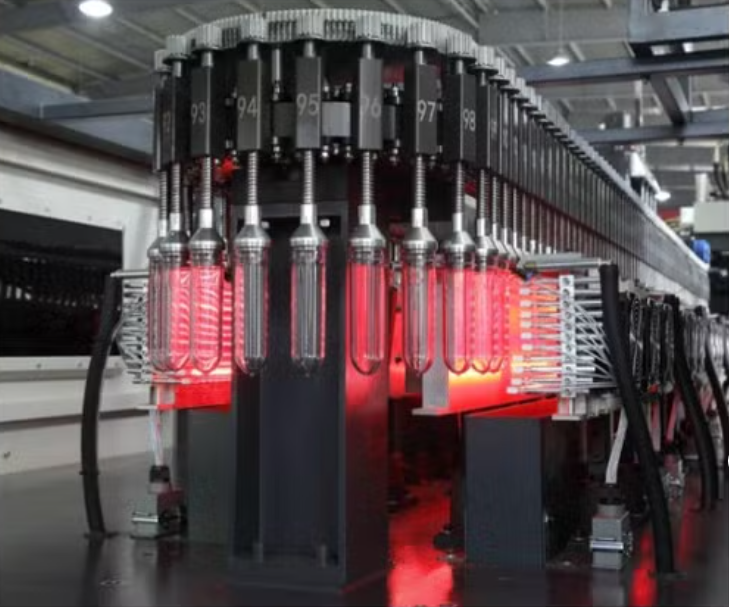
On the blow molding floor, uneven preform heating isn’t just a line-speed issue. It shows up as rejects, sloppy bottle weights, and those sudden jams when the heating tunnel can’t hold the profile you set. With Krones stretch blow molders, the heating section is the heartbeat of the cycle. If the emitter is off-spec, you spend your days chasing temperature, fiddling with power, and burning through spares way too fast.
What matters, technically
The Krones infrared lamp, 780mm, is built on a short-wave quartz halogen design. It’s meant to deliver fast, controllable heat with tight spectral control for PET preform heating. The 780mm active length matches the heating tunnel geometry in Krones machines, so the energy lands where the preform needs it—no hot spots, no cold edges. We stick to OEM-grade filament geometry and the right quartz envelope materials. Every unit gets run-tested to consistent output tolerances. It’s specified for the standard voltage and wattage used in Krones heating modules, and it mates to the same termination and alignment as the original emitters, including the common R7s interface.
Why it works on a Krones machine
On a Krones blow molder, repeatable heating is what keeps wall thickness even and the cycle stable. This lamp restores the original heating curve, so you get a tighter temperature spread across the preform. You see fewer rejects from under-stretch and stress whitening, and less operator tweaking. Because the emitter comes up to temperature quickly and holds it, the machine can run closer to its designed cycle time without over-compensating with longer heating. That means more consistent output, less wasted energy from repeated ramp-up, and fewer surprise stops. And as a direct-fit replacement, it makes spares planning simpler and cuts downtime during the swap.
The practical details
Installation is straightforward, but the heating section has to be clean and aligned. Even a small mis-seat will give you uneven heating and shorten lamp life. **Handle the quartz envelope by the base, not the glass.**Check the reflector, too—pitting or oxidation scatters energy and throws the profile off. Ambient airflow and cooling around the lamp matter. If tunnel airflow is restricted, the lamp runs hotter, and output drift starts to creep in. Match the lamp to the machine’s rated voltage, and performance stays predictable.