
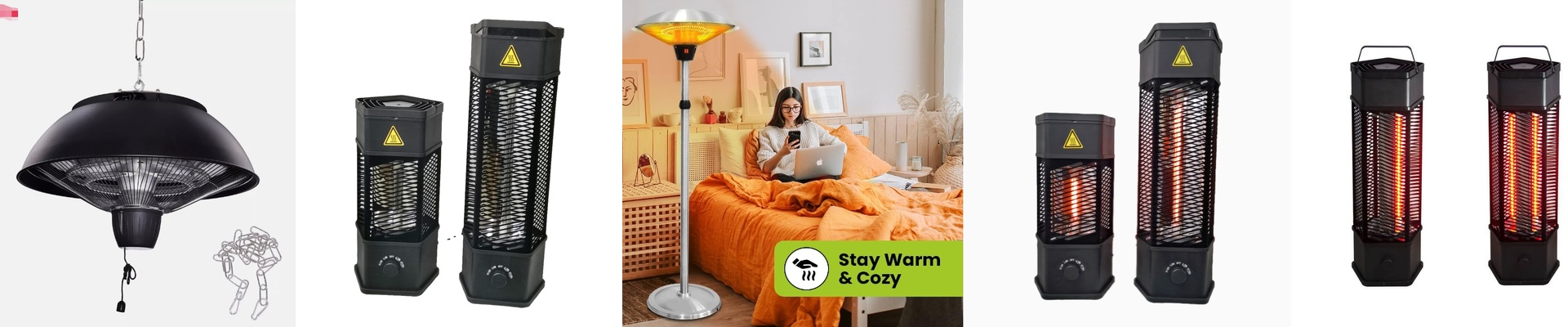

That cold in a small office cubicle isn’t just about numb hands and feet. It sneaks up on you—tightening shoulders, slowing circulation, and leaving older adults feeling wiped out long before the day is done. Forced-air heat often just stirs up drafts and big temperature swings. A compact infrared cubicle heater takes a different approach: radiant heat that warms people and surfaces directly, without pushing air around.
What actually matters, technically
An infrared cubicle heater delivers radiant warmth—think of it like the sun’s rays, but controlled, electric, and aimed right at the person nearby. You’ll usually see either a carbon fiber element or a quartz tube, producing short-wave or medium-wave infrared. The payoff is heat you feel within seconds, not minutes. In the real world, the specs that count are simple: a quiet motor, or no motor at all. A footprint that fits beside a desk. And a thermostat that holds a steady comfort zone instead of chasing hot and cold. Make sure it has the basics—tip-over protection and an overheat cut-off—and a cord and plug that’ll work with standard office outlets.
Why this works in a cubicle
For older adults especially, comfort is more than a number on a display. Radiant infrared warmth gives you a gentle, even feel across the body, helping muscles relax and keeping peripheral circulation steady. Because the heat is directional and localized, you’re not relying on air being blown around. That means fewer drafts and less disturbance of dust or allergens. In a cubicle, the result is fewer shivers, less stiffness, and a more consistent sense of well-being during long stretches at the desk.
The things to get right up front
Infrared heaters warm people and objects directly, so comfort comes down to line of sight. Position the unit where it can “see” the seated user. These are built for supplemental heat, not whole-room heating, and they perform best when the surrounding air is already moderate. Most are plug-in, but always confirm voltage and outlet placement. In commercial settings, you may need a nearby grounded outlet or even a dedicated circuit.