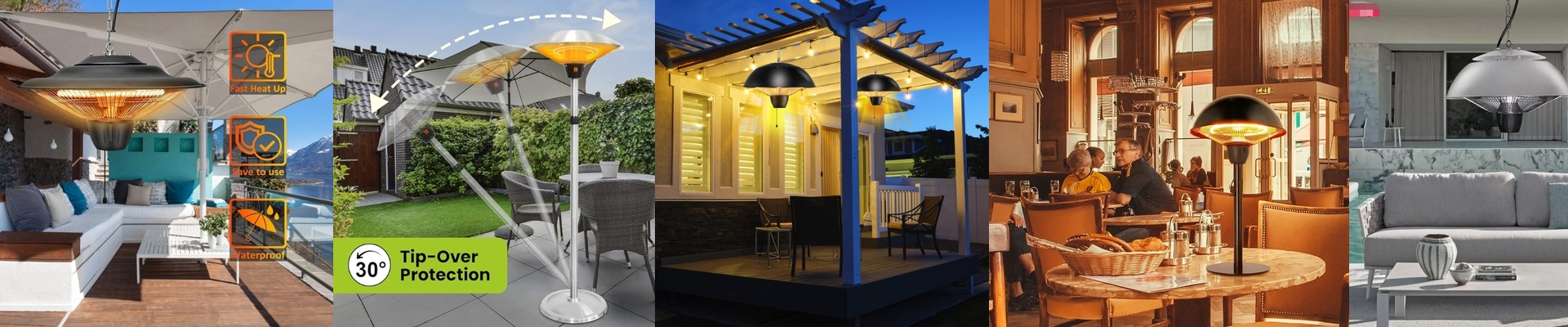

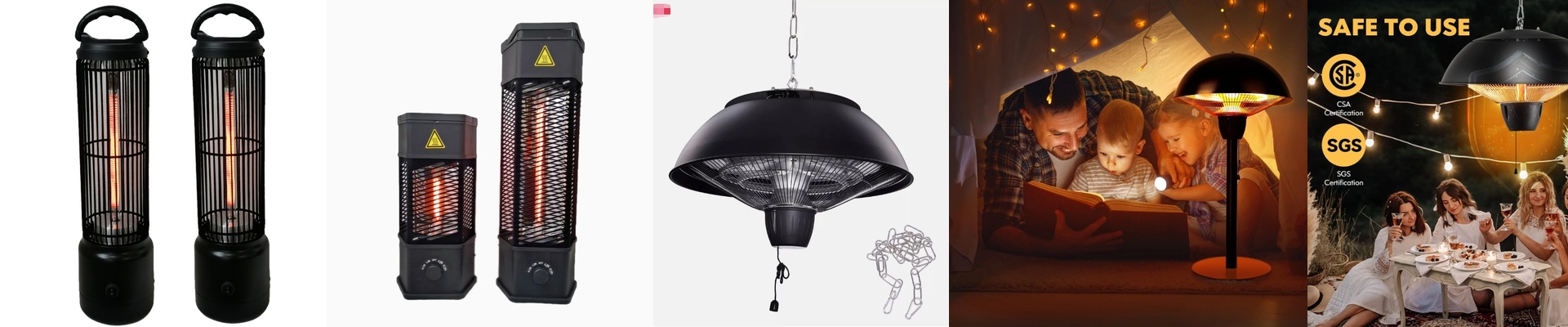
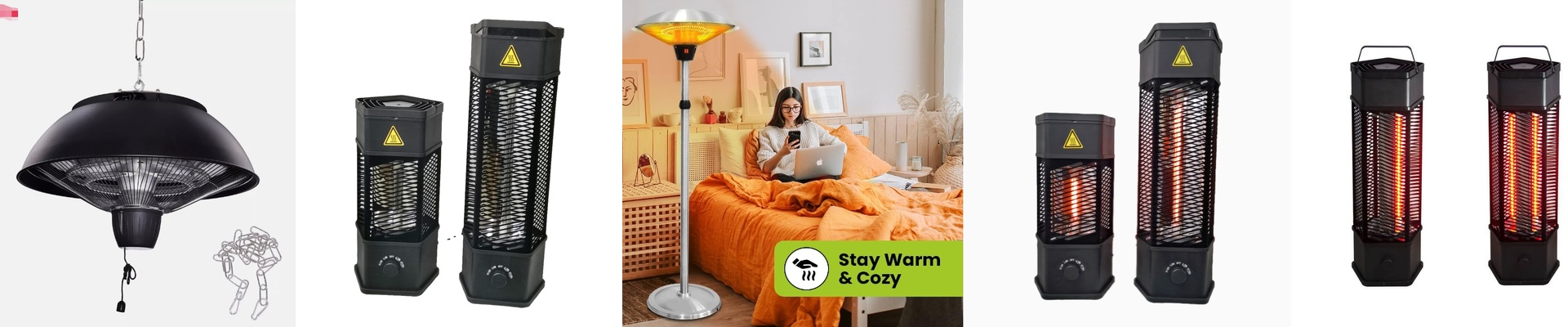
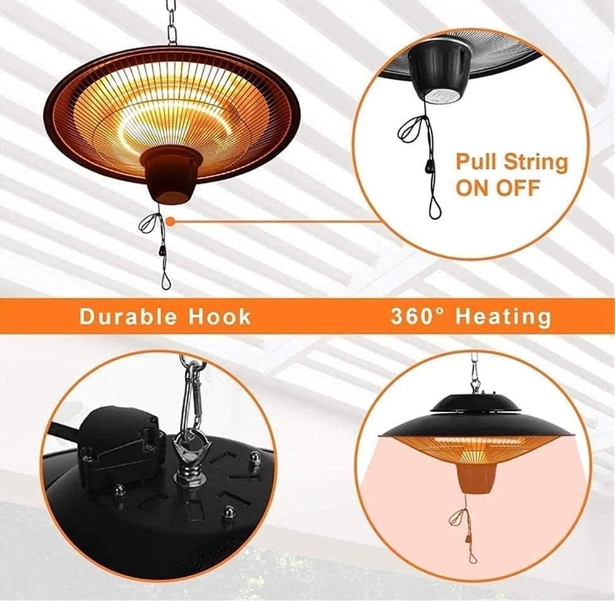
Step into the lab, and you hear the steady hum of test chambers running repeat cycles. Out here, comfort isn’t a mood we chase after the fact. It’s a target we set with physics, then back up with data. That’s why our energy-efficient space heaters lean on infrared, sending warmth right where you need it—without burning watts on air that just drifts off.
What matters under the hood
We build around a carbon-fiber emitter and quartz components tuned for the infrared spectrum. That produces radiant heat that travels in straight lines, warming people and surfaces first. In practice, you feel heat within seconds, not minutes. Pick a 1500W model when you need a focused zone, or step up to 2000W for larger patios and workshops. Every unit runs on standard 120V household power and plugs into a common NEMA 5-15 outlet. Controls stay straightforward: an adjustable thermostat holds the room at the set point, and tip-over protection cuts power if the heater gets knocked over.
Why this approach works where you need it
Outdoor living spaces are tough on convection heaters—wind steals the heat. Drafty rooms beat up forced-air systems, which stir cold air while they try to heat. Infrared sidesteps both problems. You get steady, directional warmth that doesn’t depend on circulating the whole volume of air. The payoff is comfort that feels immediate, and lower operating cost because you’re heating occupants and targeted surfaces, not the empty air above them.
The practical details you can count on
Infrared warmth works best when the heater has a clear line of sight to you. Obstructions and tall partitions cut coverage, so placement matters. For outdoor use, look for an IP rating suited to damp conditions, and keep the heater protected from direct rain. This is direct heat, so start with the thermostat at a moderate setting and fine-tune until the feeling is just right.