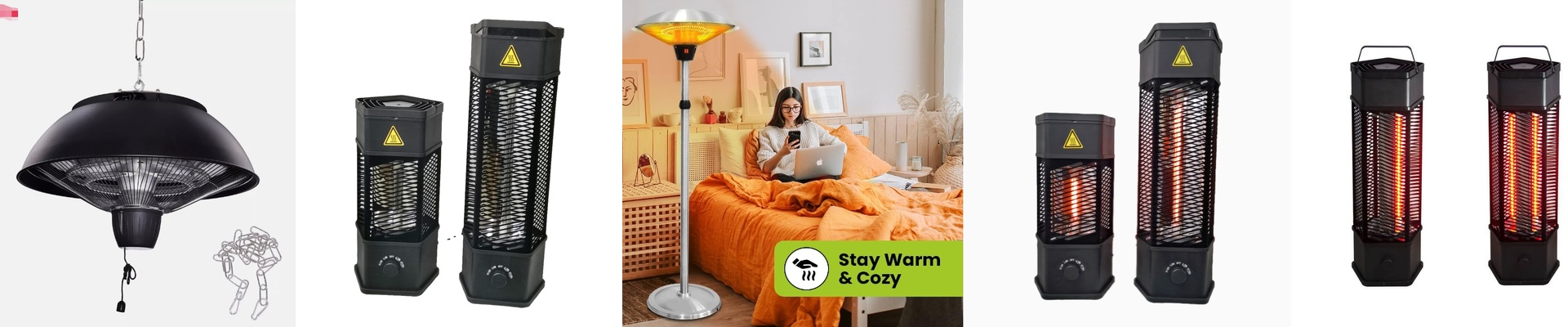

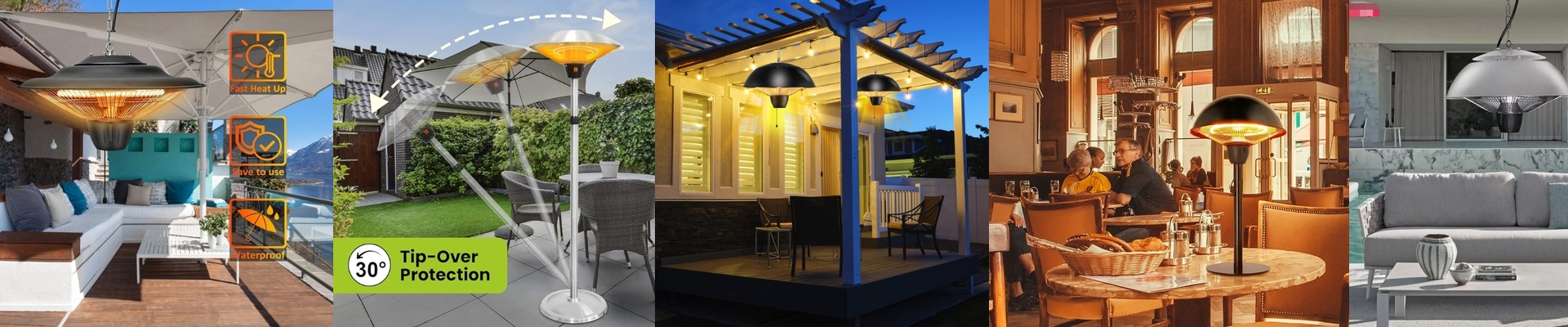
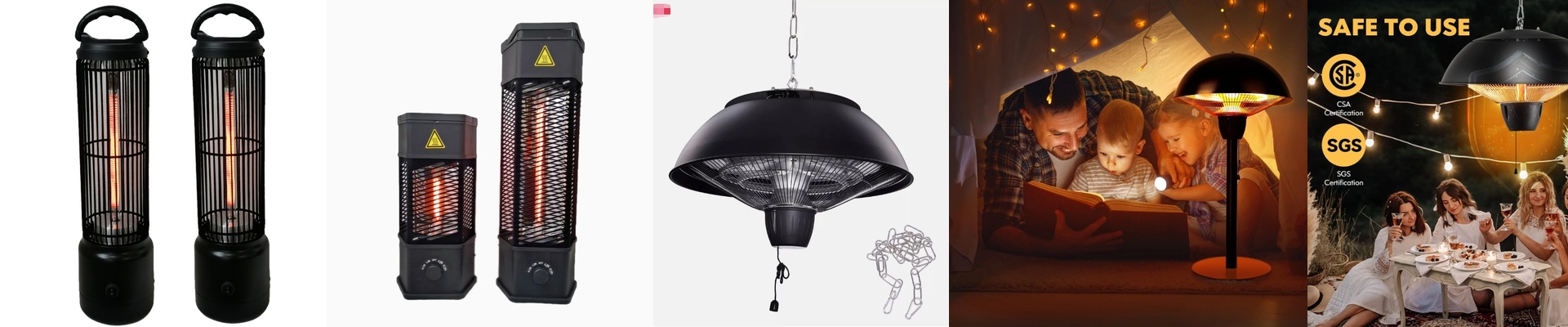
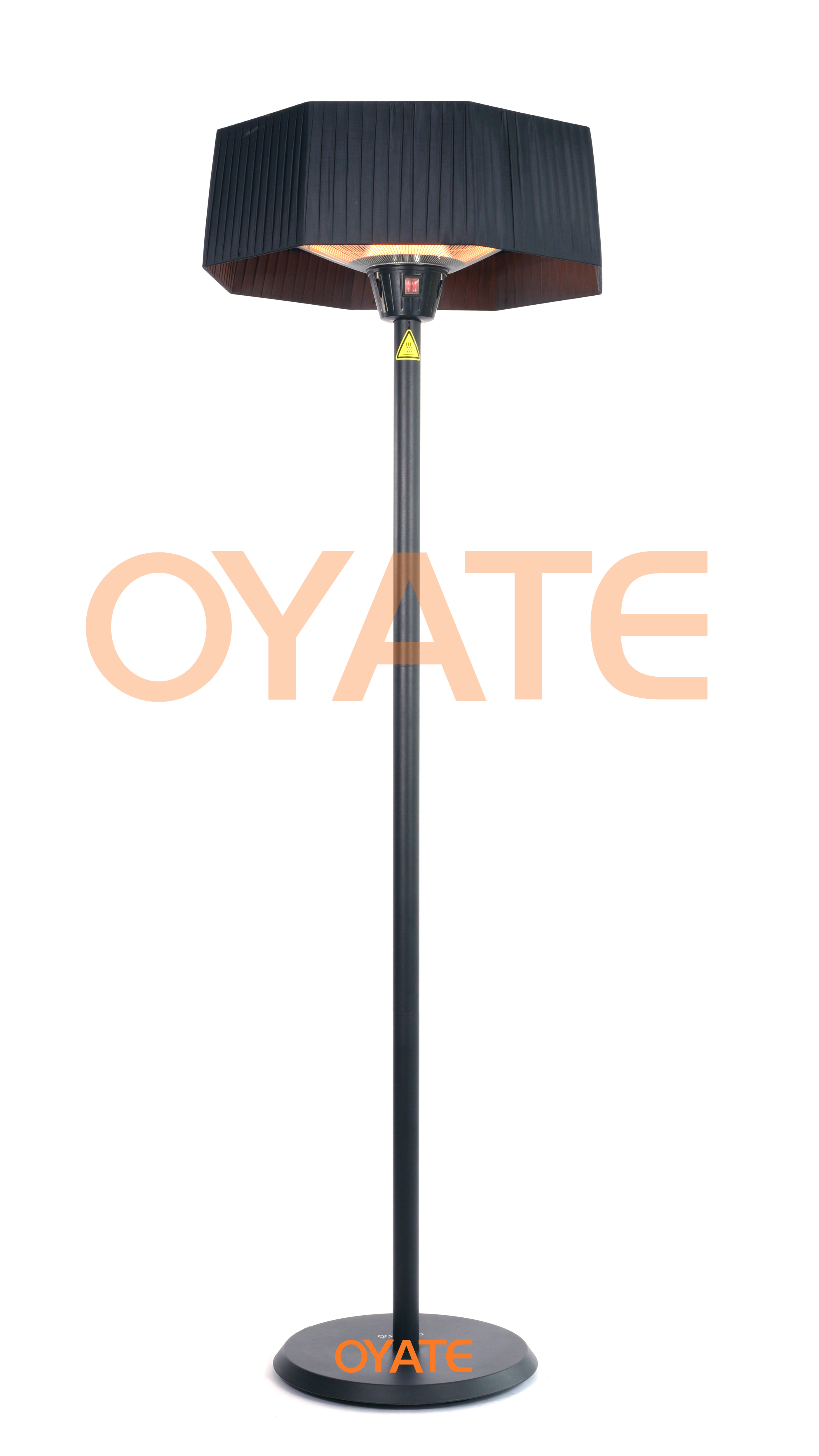
Step outside on a cool night and what you want is heat—right now. With an infrared heater, the warmth hits almost immediately, a clean, direct wave you can feel. That quick response isn’t by accident; it’s the kind of engineering you notice the moment you turn it on.
What’s actually going on under the hood
Low-light infrared heaters deliver radiant warmth by heating a filament inside a quartz tube until it glows, then sending that energy outward. The output is mostly near-infrared, which travels in straight lines and gets absorbed by people and objects directly, instead of wasting time heating the air. Many models run on a carbon fiber element for fast heat-up and long life, typically putting out around 1,500W on a 120V circuit. The low-light design keeps the glow soft and unobtrusive—ideal for conversation areas. Built-in thermostats and tip-over protection add practical control and a solid safety baseline.
Why this makes sense outdoors
Outdoor living is about comfort without the lag. With infrared, you feel the warmth within seconds, so dinner on the patio, a quiet read on the deck, or a family chat under the stars doesn’t depend on the heater “warming up.” The heat stays focused where you need it, so you’re not throwing energy at empty air. And for anyone who’s sensitive to cold, that direct warmth can ease muscle stiffness and help circulation, turning a chilly evening into something genuinely relaxing.
The practical details that matter
Infrared heat works best with a clear line of sight. Position the heater so it isn’t blocked by furniture, railings, or overhead structures. Because it warms people and surfaces directly, you can still feel a draft if the air is moving—ambient air temperature doesn’t tell the whole story. **Pair it with a wind-blocked layout or an enclosure for the most consistent comfort.**Also, confirm your outlet and circuit can handle the load, and keep the heater at the recommended clearance from combustibles.