Getting That Perfect Crust with Shortwave IR
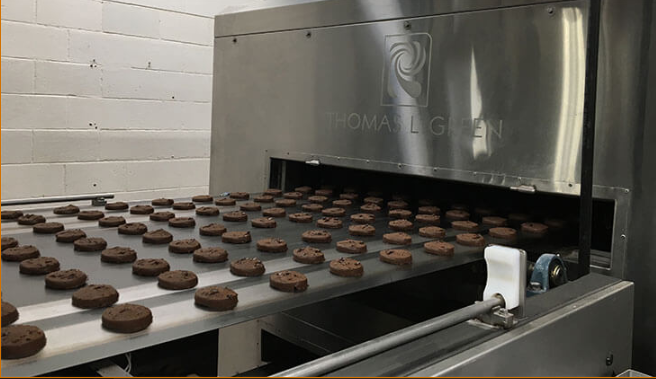
If you’ve ever chased that specific, charred, crispy crust you only get from a high-end deck oven, you know it’s not just about “turning up the heat.” It’s about speed. We use high-power halogen bulbs to trigger that caramelization in a matter of seconds. Instead of waiting for the air inside the oven to warm up, shortwave infrared (IR) radiation hits the dough instantly. It’s like a flash of heat.
Timing the Browning Just Right
To nail the Maillard reaction—that magic moment where the dough turns golden brown—you need a lamp that hits its peak temperature almost the second you flip the switch. We go with bulbs that have high wattage density. This lets the oven ramp up fast, so you get a sharp temperature difference between the outside and the inside. You get that gorgeous sear on the crust without drying out the middle of your product. One heads-up: if you’re running these at full blast, that heat flux is intense. It can really stress your oven’s housing. Just make sure your ventilation can keep up with how fast the air heats up around the unit.
The Gear Under the Hood
We use high-purity quartz glass for these. Why? Because rapid heating and cooling (thermal shock) would shatter regular glass. We also rely on the halogen cycle. It stops the tungsten filament from evaporating and gunking up the inside of the tube. This means your light output stays consistent and you aren’t replacing bulbs every few weeks. When it comes to the fit, we usually suggest R7s or similar spring-loaded connectors. They give the bulb room to breathe. When a bulb hits 2000°C, it expands. If you use a rigid connection, the glass will just snap.
Making it Work in Your Oven
These lamps are pretty easy to swap in for standard heating elements, but they do change how the oven “feels.” You’re moving from convection (hot air) to radiation (direct heat). The cool part? You can actually lower your overall oven temperature and still get that high-heat sear. Just keep an eye on your power. Voltage spikes are the enemy here—they’ll burn out your filament way sooner than they should. Keep your power steady, and you’re good to go.