On a blow molding line, the heating tunnel is the heartbeat. If the lamps aren’t pulling their weight, preforms heat unevenly, and the blow molder spends the shift chasing scrap. We make Sidel heater lamps in China to the same OEM specs, so the machine runs the way it was designed to run.
What matters under the hood
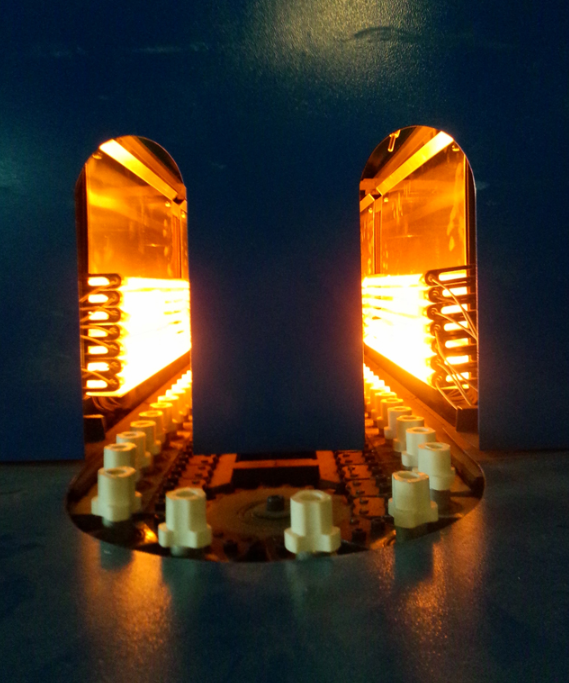
These are straight-up Sidel replacements: short-wave infrared emitters with quartz tubes, rated 2400–3200 W, 220–240 V, and the standard R7s connector. We match the filament geometry and the reflector layout to the original footprint, so the irradiance distribution across the preform neck and body stays where it should. Every unit gets tested for spectral output, temperature rise time, and power factor. We also run life tests at full load—5,000+ hours is typical, with output dropping less than 5%.
Why this matters on a Sidel blow molder
On a Sidel, heating stability is the bottleneck. When the lamps are right, the heat profile comes back to spec, and you get repeatable wall thickness with fewer pinholes. The faster thermal response shaves seconds off each cycle—multiply that across millions of bottles and you’re talking real time. Energy use falls because the emitters put heat where it’s needed, not into the surrounding air. And with stable output, you don’t have to over-stretch preforms to hit target weight, so material cost drops.
What to watch for on the floor
It’s plug-and-play, but the heating tunnel is a brutal environment. Check the socket condition and clean the reflector before you insert the lamp—pitted contacts and soot will drive flicker and uneven heating. Confirm the voltage at the terminal too; miswiring will cook filaments fast. At end-of-life, expect around 10–15% brightness variance.Plan replacements by runtime, not calendar. We back every lamp with traceable material records, in-process inspection, and batch testing—so you can keep the line running without second-guessing.